
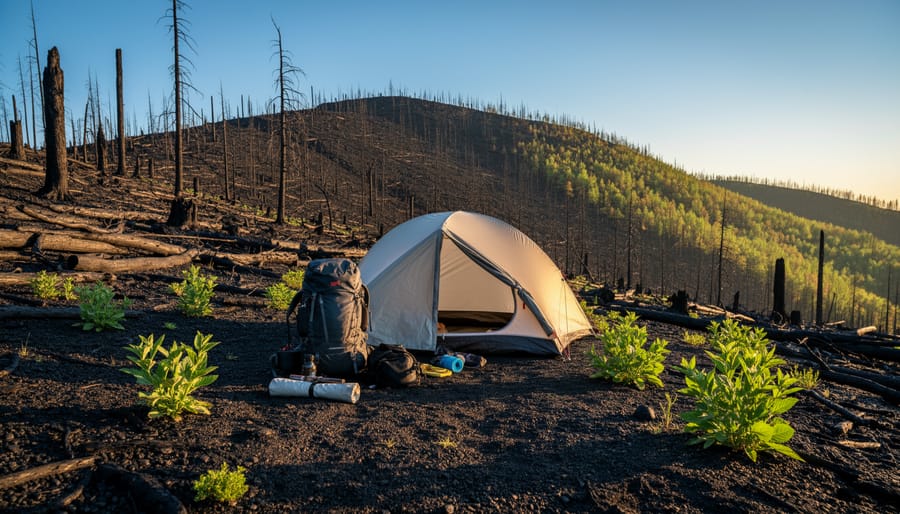
Burned landscapes offer unexpected opportunities for those willing to see beyond the charred surface. While many rush to sell fire damaged house properties, forward-thinking conservationists recognize post-wildfire land as prime territory for creating meaningful outdoor spaces that serve both recreation and ecological restoration.
Scout properties within 18-24 months after a fire when prices typically drop 30-60% below pre-burn values. Contact local land trusts and conservation districts first—they often know about distressed properties before they hit public listings and can provide crucial insight into soil stability and watershed conditions.
Assess regeneration potential by examining root crowns of native plants and checking for sprouting patterns across the property. Fire-adapted ecosystems like oak woodlands and ponderosa pine forests bounce back faster than you might expect, often showing significant green-up within a single growing season.
Negotiate directly with overwhelmed owners facing cleanup costs and insurance complexities. Many welcome cash offers from buyers committed to land stewardship rather than speculative development, especially when traditional buyers shy away from fire-scarred acreage.
This approach transforms devastation into opportunity. You gain affordable access to land while participating in one of nature’s most dramatic renewal processes. Post-fire properties suitable for conservation camping require patience and ecological understanding, but they reward stewards with front-row seats to regeneration, reduced acquisition costs, and the satisfaction of protecting vulnerable landscapes during their most critical recovery phase. The journey from blackened earth to thriving campground connects you deeply to natural cycles while building a sustainable outdoor retreat that honors the land’s resilience.
Why Fire-Damaged Land Deserves a Second Life
The Surprising Resilience of Burned Ecosystems
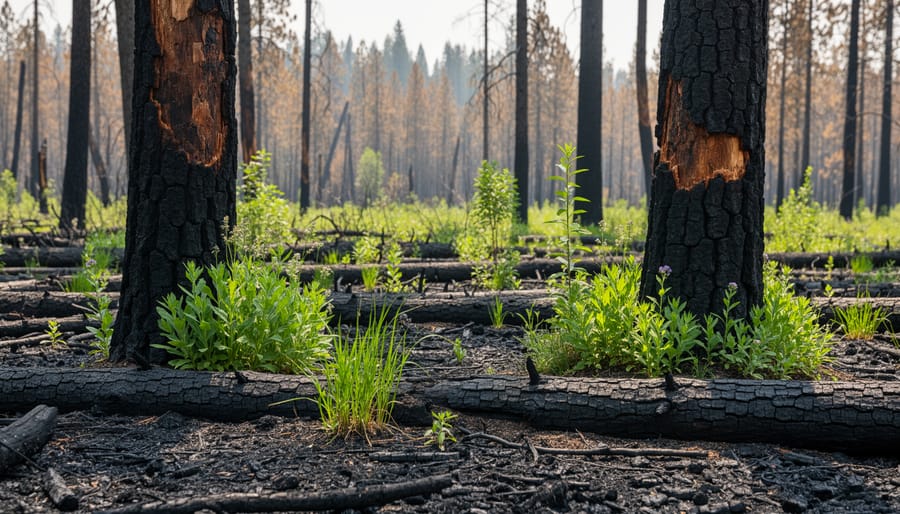
Here’s something that might surprise you: burned landscapes aren’t ecological disasters waiting decades to recover. They’re actually dynamic systems already springing back to life, often within weeks of the flames dying down.
Nature has been dealing with fire for millions of years, and many ecosystems have evolved not just to survive it, but to thrive because of it. Take lodgepole pines, for example. These remarkable trees produce serotinous cones that only open and release seeds when exposed to intense heat. Within months of a fire, you might spot thousands of tiny seedlings carpeting the forest floor, taking advantage of the newly available sunlight and nutrient-rich ash.
Fire actually plays a crucial housekeeping role in many ecosystems. It clears out dense undergrowth that would otherwise create dangerous fuel loads, returns nutrients to the soil through ash, and creates diverse habitat conditions. That charred landscape you’re considering? It’s likely supporting a fascinating succession of life stages, from pioneering wildflowers to returning wildlife.
The soil beneath your feet recovers faster than you’d think too. While severe fires can temporarily reduce soil organisms, populations typically rebound within one to three years. The ash acts as a natural fertilizer, and the exposed mineral soil provides ideal germination conditions for native plants.
When you purchase post-wildfire land for conservation camping, you’re not rescuing a dead zone. You’re becoming a steward of a landscape in the midst of one of nature’s most dramatic and essential renewal processes, witnessing resilience in real-time.
The Conservation Camping Opportunity
Conservation camping reimagines how we interact with healing landscapes after wildfire. Unlike traditional campgrounds with developed facilities, conservation camping creates minimal-impact recreation areas where visitors can connect with nature while actively supporting the land’s recovery. Think of it as becoming a steward rather than just a visitor—you’re not only enjoying the outdoors but contributing to its restoration.
Post-fire land presents a unique opportunity for this approach. The cleared understory and reduced vegetation make it easier to establish low-impact campsites without further disrupting ecosystems. These spaces can serve multiple purposes: providing affordable outdoor recreation for communities, generating modest income through camping fees that fund restoration projects, and creating living laboratories where visitors witness nature’s remarkable resilience firsthand.
The beauty of conservation camping on recovering land lies in its educational value. Campers observe regrowth patterns, understand fire ecology, and develop deeper connections to the natural world. You’re creating spaces where people can experience wilderness authentically while the land heals around them—a powerful combination that benefits both visitors and the environment. This model proves that recreation and restoration aren’t opposing forces; they’re partners in creating sustainable outdoor spaces.
Navigating the Fire Damaged Property Market
Where to Find Post-Wildfire Land for Sale
Finding post-wildfire land requires a bit of detective work, but several excellent resources can connect you with these unique properties. Start with county assessor websites and local government land management offices, where you’ll often discover fire-damaged parcels before they hit mainstream markets. Many counties maintain public databases of tax-defaulted properties or lands slated for auction, and wildfire-affected parcels sometimes appear here at surprisingly accessible prices.
Online platforms like LandWatch, Lands of America, and LandHub allow you to filter searches by recent wildfire zones. Simply research which regions experienced fires in recent years and focus your search there. Real estate agents specializing in rural and recreational properties can be invaluable allies—they often know about off-market opportunities and understand the nuances of fire-damaged land transactions.
Don’t overlook state forestry departments and conservation districts, which occasionally sell parcels for ecological restoration purposes. These agencies appreciate buyers with conservation intentions and may offer favorable terms or guidance. Local land trusts can also point you toward properties needing stewardship, sometimes facilitating connections between sellers and conservation-minded buyers.
County planning departments are goldmines of information about recently burned areas and future development restrictions. Building relationships with these offices helps you understand zoning considerations while demonstrating your commitment to responsible land use. Fire districts maintain detailed burn maps that help identify affected properties worth investigating.
Remember, the best opportunities often come through community connections—attending local meetings and engaging with residents in fire-affected areas can lead you to motivated sellers seeking responsible stewards for their land.
What Affects the Price (And What You Can Negotiate)
Understanding what influences land prices after a wildfire helps you make smarter offers and negotiate effectively. Several key factors come into play when determining value.
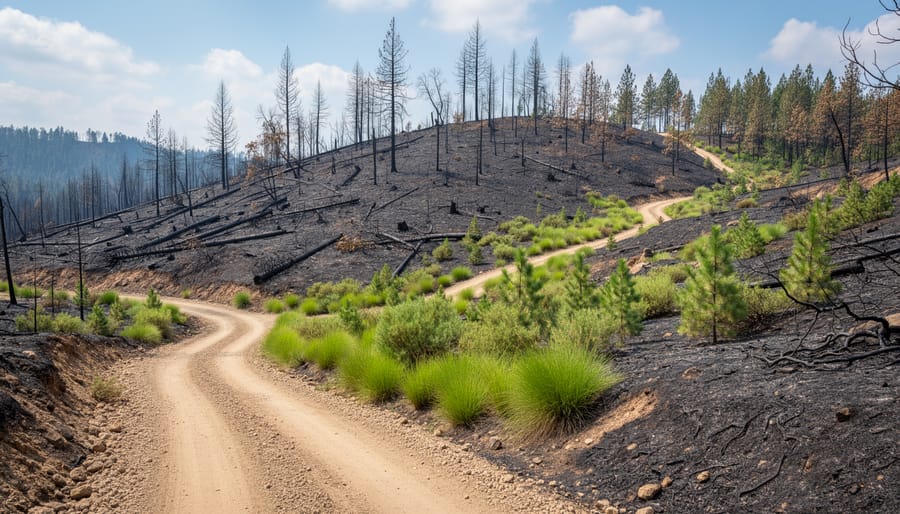
Burn severity dramatically impacts pricing. Lightly scorched properties with intact topsoil and surviving root systems typically command higher prices since recovery happens faster. Severely burned land with complete vegetation loss and potential erosion issues often sells at significant discounts, sometimes 40-60% below pre-fire values. This creates opportunities for conservation-minded buyers willing to invest in restoration.
Accessibility matters tremendously. Properties with maintained road access retain more value than landlocked parcels requiring easement negotiations. However, limited access can work in your favor during negotiations, especially if you’re comfortable with rustic conditions and don’t mind blazing your own trail.
Water rights are gold in recovering landscapes. Land with existing wells, springs, or surface water rights typically costs more but provides essential resources for both camping activities and ecological restoration. Properties without established water access offer negotiation leverage.
Existing infrastructure like cleared building pads, septic systems, or utility connections adds value, though fire-damaged structures might actually decrease prices due to cleanup costs.
Market timing significantly affects opportunities. Prices typically drop immediately post-fire when emotional sellers want quick exits, then gradually recover as nature heals. Local economic conditions and insurance payouts also influence seller motivation, creating windows for respectful negotiations that benefit both conservation goals and landowner needs.
Questions to Ask Before You Buy
Before taking the leap, arm yourself with knowledge that’ll protect both your investment and the land itself. Start by asking your county soil conservation office about erosion potential and whether the hillsides can safely support trails and minimal structures. Fire-damaged soil often loses its ability to absorb water, creating unexpected runoff challenges you’ll want to understand upfront.
Water availability deserves serious investigation. Has the fire affected nearby springs or wells? You’ll need reliable sources for drinking water and fire suppression. Speaking of fire, request an updated wildfire risk assessment that factors in the changed landscape—burned areas often face different risks than they did before.
Don’t skip the nitty-gritty legal questions either. Confirm road access rights are properly recorded, especially if you’ll be sharing routes with neighbors. Check local ordinances about camping structures, composting toilets, and length-of-stay limits. Some counties have specific regulations for fire-recovery areas.
Finally, connect with local conservation groups and nearby landowners. They’ll share invaluable insights about seasonal flooding patterns, wildlife movement, and community expectations. This groundwork transforms uncertainty into informed action, setting you up for a conservation camping site that truly gives back to the land.
Legal and Environmental Considerations You Can’t Ignore
Environmental Assessments and Soil Testing
Before you finalize your purchase, getting a thorough environmental assessment is one of the most important steps you can take. Think of it as a health checkup for the land – you want to know exactly what you’re working with so you can plan responsibly.
Start by evaluating erosion risk, which often intensifies after fires strip away protective vegetation. A soil stability assessment will reveal whether slopes are vulnerable to landslides or washouts during rainstorms. This information directly impacts where you can safely establish camping areas and trails.
If any structures burned on the property, soil testing becomes essential. Fires can release heavy metals, asbestos, and other contaminants into the ground from building materials, appliances, and household items. A certified environmental consultant can identify contaminated zones that may need remediation or simply avoidance when planning your camping spaces.
Don’t skip the habitat assessment either. Despite the devastation, post-fire landscapes often support remarkable recovery. Understanding which native species are rebounding, where wildlife corridors exist, and what sensitive areas need protection will shape your conservation approach. Many regions offer grants or technical assistance for landowners committed to habitat restoration, turning your camping project into a genuine force for ecological healing while creating an inspiring outdoor destination.
Zoning, Permits, and Use Restrictions
Before you fall in love with that perfect piece of fire-affected land, let’s talk about the not-so-glamorous but absolutely essential topic of regulations. Understanding zoning laws and permit requirements will save you from heartbreak down the road and help ensure your conservation camping vision becomes reality.
Start by checking with your county planning department about current zoning designations. Fire-damaged properties sometimes fall under agricultural, recreational, or rural residential zones, each with different allowances for camping activities. Some areas permit primitive camping on private land without special permits, while others require conditional use permits or limit the number of campers and duration of stays.
Post-wildfire properties may face additional restrictions you wouldn’t encounter elsewhere. Erosion control requirements might limit where you can place campsites or trails. Watershed protection zones could restrict development near streams. Some jurisdictions impose temporary building moratoriums on recently burned areas until ecological assessments are complete.
Don’t overlook camping-specific regulations either. Many counties distinguish between recreational camping and commercial campground operations, which triggers different permit processes. If you’re planning to host groups or charge any fees, even for conservation purposes, you’ll likely need business permits and potentially meet health department standards.
The good news? Working through these requirements often connects you with local conservation officers and land management professionals who can become valuable allies in your stewardship journey. Their expertise can guide you toward sustainable practices that protect both the land and your investment.
Insurance and Liability Realities
Navigating insurance for post-wildfire land requires patience and persistence, but understanding the realities upfront helps you plan effectively. Many traditional insurers hesitate to cover properties in fire-prone areas, which can initially feel discouraging. However, specialized carriers and state FAIR plans exist specifically for higher-risk properties. Expect premiums to reflect the landscape’s history, but remember that demonstrating active fire mitigation efforts like creating defensible space and installing fire-resistant structures can sometimes reduce costs.
When welcoming campers to your conservation land, liability protection becomes essential. Consider forming an LLC to separate personal assets from property-related risks, and secure comprehensive general liability insurance that specifically covers recreational use by guests. Some states offer agritourism or recreational use statutes that provide additional protection when you’re operating for conservation or educational purposes rather than pure profit.
Risk management goes beyond paperwork. Clear signage about fire danger, well-maintained evacuation routes, and thorough guest orientation about local conditions protect both visitors and your vision. Creating a detailed emergency response plan and maintaining relationships with local fire departments demonstrates your commitment to responsible stewardship. These proactive steps not only reduce actual risk but also show insurers you’re a serious land steward, potentially opening doors to better coverage options as your conservation camping project matures.
Preparing Your Land for Conservation Camping
Safety First: Hazard Assessment and Cleanup
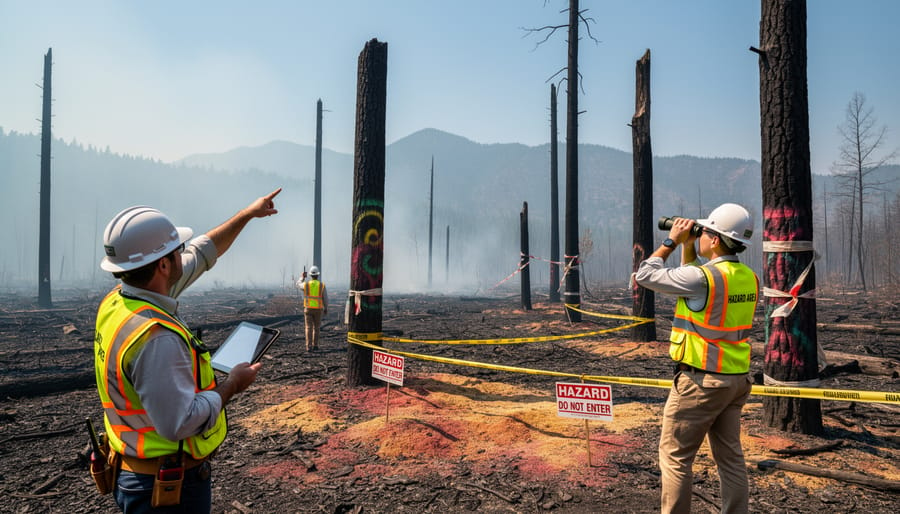
Before you break ground on your conservation camping dream, understanding and addressing post-fire hazards is essential for both your safety and the land’s recovery. Think of this phase as preparing the canvas before creating your masterpiece—it requires patience, awareness, and sometimes expert guidance.
Wildfire-affected properties present unique challenges that shouldn’t discourage you but rather inform your approach. Unstable trees, known as “snags,” pose immediate danger. These fire-weakened giants can fall unexpectedly, especially during windy conditions or when you’re working nearby. Look for trees with charred bases, missing bark, or leaning positions. Walking the property requires vigilance and proper hiking footwear with ankle support, as hidden ash pits can remain hot beneath the surface for months after flames subside.
Soil contamination deserves attention too. Ash contains concentrated toxins from burned structures, vehicles, or vegetation. Testing soil before developing camping areas protects both visitors and the ecosystem you’re working to restore.
For hazard assessment, consider hiring certified arborists to evaluate tree stability and forestry professionals for large-scale debris removal. While initial cleanup costs seem daunting, prioritize high-traffic areas first. Remove hazardous trees near planned camping spots, trails, and structures before tackling the broader landscape.
Professional help becomes non-negotiable when dealing with structural remains, hazardous materials, or slopes prone to erosion. However, much of the lighter debris removal can become community volunteer projects, turning cleanup into connection-building opportunities. This collaborative approach honors both safety and stewardship while keeping your conservation vision financially sustainable.
Building Low-Impact Infrastructure
Creating infrastructure on your post-wildfire conservation land is all about finding that sweet spot between providing a comfortable camping experience and honoring your commitment to environmental stewardship. Think of it as building just enough to enhance access and safety while letting the landscape heal naturally.
Start with access trails that follow natural contours and avoid erosion-prone areas. Use simple materials like reclaimed wood for boardwalks over sensitive spots, allowing native vegetation to regenerate underneath. These pathways protect recovering soil while giving campers clear routes that prevent random trampling across fragile regeneration zones.
For camping spots, designate specific areas based on the land’s recovery stage. Choose naturally resilient sites on durable surfaces like gravel or established clearings rather than creating new disturbances. Keep numbers limited to what the land can sustainably support. Consider providing basic amenities like quality camping tents platforms using permeable materials that allow water infiltration while preventing soil compaction.
Fire management deserves special attention on fire-scarred land. Install properly designed fire rings with mineral soil borders and educate campers about safe practices. Some conservation sites find success with solar-powered camping infrastructure like charging stations, reducing reliance on campfires altogether.
Waste management systems should be simple yet effective. Composting toilets, gray water dispersion fields, and pack-it-in-pack-it-out protocols align perfectly with Leave No Trace principles while minimizing your environmental footprint. Remember, the goal is infrastructure that serves people today while protecting the land for tomorrow’s adventures.
Supporting Natural Regeneration While You Build
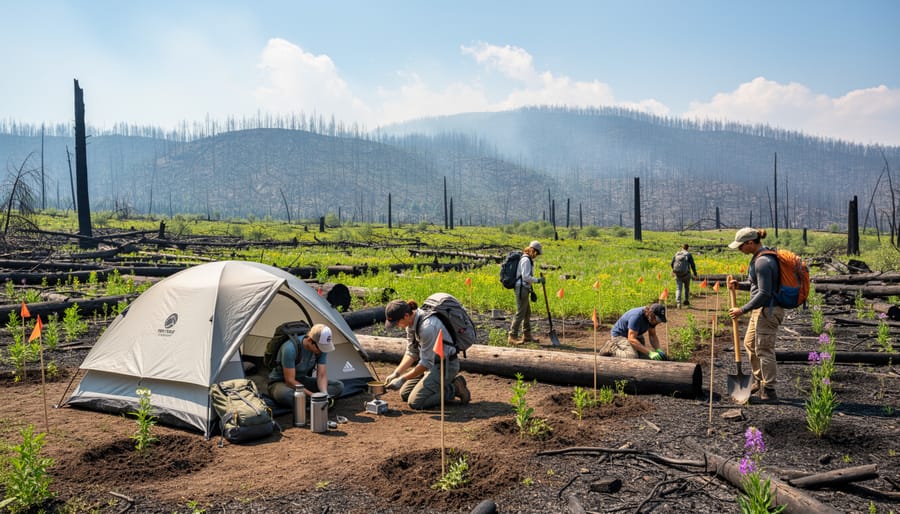
Nature is remarkably resilient, and your role is to support—not force—its comeback story. Start with simple erosion control measures like placing fallen logs along slopes and creating small check dams in drainage areas using natural materials already on-site. These gentle interventions slow water flow and give soil a fighting chance to stabilize.
Consider working with local conservation groups to identify native plants thriving in post-fire conditions. These pioneer species often need surprisingly little help once competition from invasive plants is reduced. Create temporary fencing around naturally regenerating areas to protect new growth from wildlife browsing while you’re developing camping spots.
Time your construction activities thoughtfully. Avoid heavy equipment use during wet seasons when soil compaction damages recovering root systems. Instead, establish clearly marked paths and building zones to concentrate impact in designated areas, leaving the rest of your land undisturbed to heal naturally.
Connect with regional native plant nurseries about salvage programs—many collect seeds from burned areas for restoration projects. You might even source plants specifically adapted to your property’s unique conditions, creating a living laboratory where camping guests witness recovery firsthand.
Creating a Sustainable Management Plan
Setting Carrying Capacity and Use Guidelines
Determining carrying capacity starts with understanding your land’s current recovery stage. Work with local ecologists or forest service experts to assess soil stability, vegetation regrowth, and wildlife activity patterns. A general guideline for recovering landscapes is to start conservatively—perhaps limiting initial use to 5-10 campers per acre during peak season, then adjusting based on impact monitoring.
Seasonal considerations are crucial. Many post-fire ecosystems need complete rest during wet seasons when soils are most vulnerable to compaction and erosion. Consider restricting camping to drier months, typically late spring through early fall, giving the land breathing room when it needs it most.
Establish clear use guidelines that visitors can easily follow. Designate specific camping zones to concentrate impact away from sensitive restoration areas. Require campers to bring essential camping gear that minimizes environmental footprint, including portable stoves to prevent additional fire risk. Implement a reservation system to control numbers and educate visitors before arrival about the land’s unique recovery story.
Create simple, positive rules: stay on designated trails, camp only in marked areas, pack out everything you pack in, and respect seasonal closures. Share the “why” behind each guideline so visitors become active participants in the healing process.
Fire Prevention and Emergency Preparedness
Creating a fire-resilient camping environment is your most important responsibility as a steward of post-wildfire land. Start by establishing defensible space around any structures or frequent camping areas—clearing at least 30 feet of vegetation, dead wood, and other combustible materials. This buffer zone can make the difference between a manageable situation and a catastrophe.
Your emergency preparedness plan should be collaborative and comprehensive. Work with local fire departments to understand evacuation routes and establish multiple exit strategies from your property. Install clearly marked fire extinguishers at camping sites and create a communication system that works even without cell service—two-way radios are invaluable investments for your camping community.
Share your emergency plan with every visitor, making it as accessible as your trail maps. Consider creating a simple handout that includes evacuation routes, emergency contact numbers, and the nearest assembly point. Weather monitoring equipment can provide early warnings about dangerous fire conditions.
Remember, fire prevention isn’t about creating fear—it’s about building confidence and safety within your camping community. Regular fire safety workshops can transform campers into informed stewards who understand their role in protecting this recovering landscape. When everyone shares responsibility for safety, your conservation project becomes stronger and more resilient.
Monitoring and Adaptive Management
Establishing a simple monitoring routine transforms your conservation camping site into a living classroom where nature teaches you what works. Start with photo documentation—take pictures from the same spots each season to visually track vegetation regrowth, erosion patterns, and habitat recovery. This creates a powerful story of renewal that both informs your management decisions and inspires visitors.
Set up basic monitoring stations to track visitor impact. Mark informal trails that emerge, note which camping spots show wear, and observe wildlife activity through game cameras or simple observation logs. Invite campers to contribute their sightings and observations, turning guests into citizen scientists who feel invested in the land’s recovery.
The real magic happens when you use this information to adapt. If a particular area shows slow recovery, give it more rest by redirecting visitors elsewhere. Notice native wildflowers thriving? Share seeds in degraded spots. See erosion forming? Add strategic water bars or plantings. This responsive approach means your land management evolves with the ecosystem rather than following a rigid plan that might not fit reality. Regular check-ins—even informal monthly walks—keep you connected to the land’s changing needs while building your ecological knowledge alongside nature’s remarkable comeback story.
Funding Your Conservation Camping Project
Grants and Conservation Funding Sources
Transforming fire-damaged land into conservation camping spaces doesn’t have to drain your savings. Several funding opportunities exist specifically for post-wildfire restoration and public access projects. The National Fish and Wildlife Foundation offers habitat restoration grants that often include wildfire recovery initiatives, while the Natural Resources Conservation Service provides financial assistance through their Emergency Watershed Protection program.
Conservation easements present an exciting pathway—you retain ownership while partnering with land trusts to protect the property’s ecological value. Organizations like The Nature Conservancy and local land trusts can help structure easements that reduce property taxes and potentially provide upfront payments. These partnerships ensure your land contributes to regional conservation corridors while allowing managed recreational access.
Just as you’d research funding your camping adventure, exploring state-level programs is essential. Many states offer wildfire resilience grants and open space funding specifically for projects that combine restoration with community recreation. The American Hiking Society’s Trail Fund and various outdoor recreation coalitions also support projects creating sustainable public access. Consider connecting with regional conservation districts who frequently know about lesser-known funding sources and can provide technical assistance throughout your restoration journey.
Sustainable Revenue Models
Creating a financially sustainable conservation camping site means building revenue streams that honor both the land and your restoration mission. Low-impact camping fees form your foundation—think carefully designed campsites that minimize environmental footprint while offering visitors an authentic connection to the healing landscape. Price your sites to reflect the value of the experience and the conservation work you’re supporting, and be transparent with campers about where their fees go.
Educational programs transform your land into a living classroom. Host wildfire ecology workshops, native plant identification walks, or photography sessions documenting regeneration. These programs generate income while deepening visitors’ connection to post-fire landscapes and building community support for your conservation efforts.
Consider establishing a stewardship volunteer program where participants contribute work hours in exchange for reduced camping fees. Volunteers can help with trail maintenance, invasive species removal, or monitoring native plant recovery—tasks that benefit the land while creating meaningful experiences. This model reduces operational costs while fostering a dedicated community invested in your site’s success.
Grant funding and conservation partnerships can supplement earned income, especially during your early years. Many organizations actively support post-fire restoration projects, recognizing their critical role in landscape recovery and climate resilience.
You stand at the intersection of two powerful opportunities: securing affordable land for your outdoor dreams while breathing new life into ecosystems that desperately need your help. Post-wildfire properties aren’t just discounted real estate—they’re canvases where conservation and adventure unite in the most meaningful way possible.
Every charred acre holds the promise of transformation. When you choose to invest in fire-damaged land for conservation camping, you’re not just buying property; you’re becoming a steward of renewal. You’ll witness firsthand how forests regenerate, watch wildlife gradually return, and create spaces where others can connect with nature’s incredible resilience. This isn’t merely about owning land—it’s about participating in one of nature’s most remarkable comeback stories.
The path forward is clearer than you might think. Start by researching available properties in regions that align with your vision. Connect with local conservation organizations who can provide invaluable guidance and potential partnership opportunities. Reach out to forestry experts who understand post-fire ecology and can help you develop sustainable management plans. Don’t hesitate to join online communities of like-minded landowners who’ve walked this path before you—their experiences will prove invaluable.
Your journey begins with a single step, whether that’s attending a land auction, scheduling a property visit, or simply reaching out to a local land trust. The combination of affordability, environmental impact, and personal fulfillment makes this venture uniquely rewarding. You have the power to transform devastation into destination, creating spaces where people can experience wilderness while supporting its recovery. The land is waiting, and so is the adventure of a lifetime.